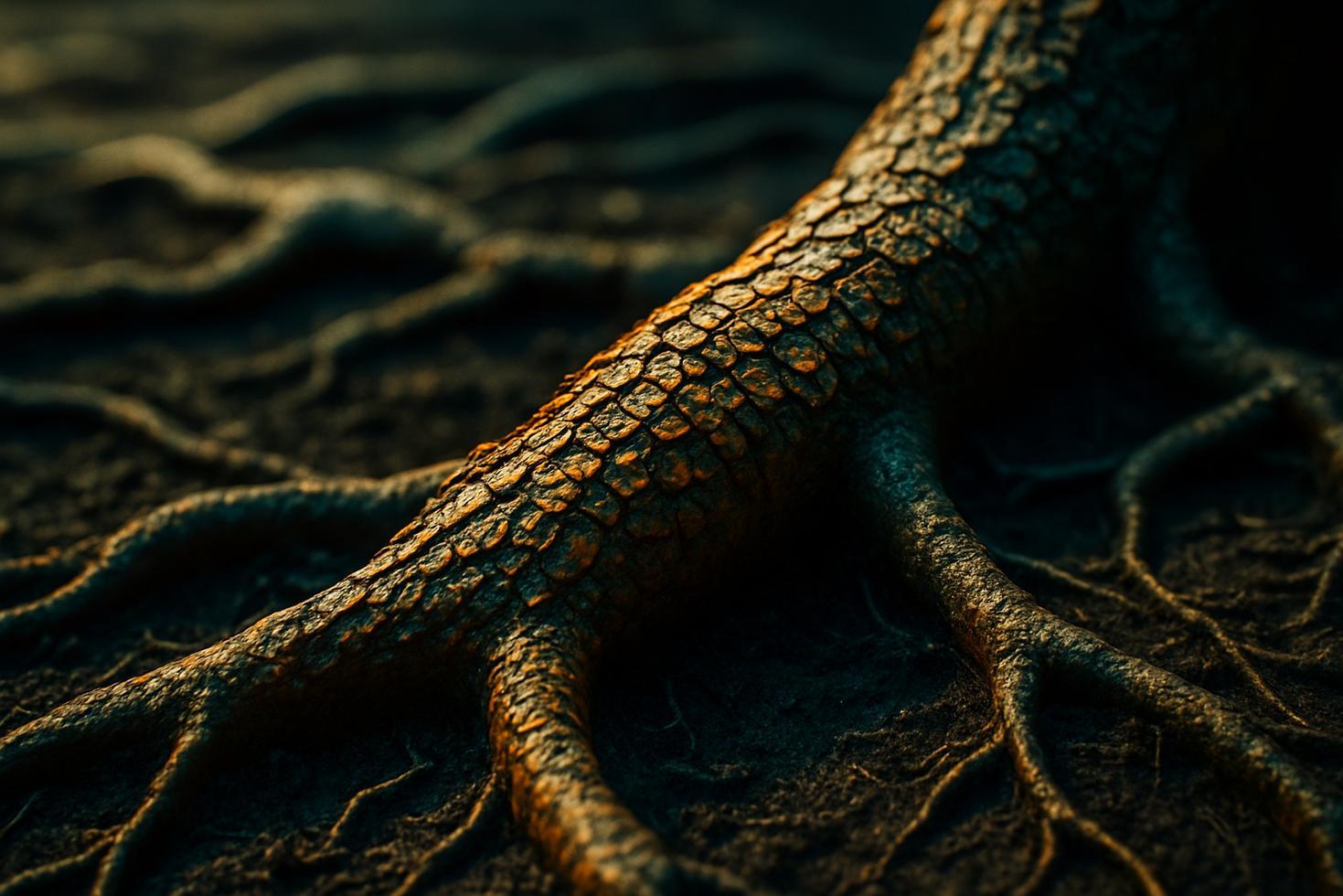
Black walnut roots spread 2 to 4 times the canopy’s width — up to 75 feet out — and juglone keeps killing susceptible plants as long as roots and decaying tissue remain in the soil.
A black walnut tree’s toxic reach extends far beyond anything visible from above. Its roots can push 50 to 75 feet outward from the trunk — two to four times the canopy diameter — and feeder roots concentrate in just the top 6 to 24 inches of soil, where most garden plants root too.
That shallow placement matters. The chemistry isn’t buried deep. It’s running through the same zone where tomatoes, blueberries, and rhododendrons send their roots.
Quick Answers
- Black walnut roots spread 2 to 4 times the canopy diameter, up to 50–75 feet from the trunk.
- Feeder roots concentrate in the top 6 to 24 inches of soil.
- Juglone is released by living roots and decaying plant tissue both.
- Susceptible plants remain at risk as long as roots or decomposing material stay in the soil.
- The toxic zone isn’t under the canopy — it extends across the full root system.
How Juglone Moves Through the Soil
Juglone is a compound produced throughout the black walnut — in leaves, hulls, bark, and roots. Living roots release it continuously. Decaying roots and organic material release it as they break down.
Because feeder roots are concentrated in the top 6 to 24 inches of the soil profile, juglone enters exactly the zone most cultivated plants depend on. Soil texture and drainage influence how the compound moves and lingers — restricted drainage and limited aeration slow its breakdown.
What Happens to Juglone After the Tree Is Removed
This is where most gardeners get surprised. Removing the tree doesn’t end the chemistry. Roots left in the ground continue to release juglone as they decompose slowly.
Susceptible plants remain at risk as long as roots and decaying tissue persist. Extension sources don’t pin a single universal timeline to that process — decomposition rates vary by soil, climate, and root mass. But the practical takeaway is clear: the ground isn’t reset by the chainsaw.
One documented management response is raising the planting surface entirely. Fresh soil in raised beds sits above the native root zone. Since feeder roots are shallow and concentrated in the original soil profile, new growing medium above that layer avoids the heaviest juglone load.
Which Plants Are Sensitive to Juglone
Not every plant reacts to juglone. Tomatoes, blueberries, and rhododendrons are among the well-documented sensitive species. Other plants — including many grasses — tolerate it without visible damage.
The effect on sensitive plants can be gradual. No single dramatic collapse marks exposure. A slow decline that reads as poor drainage or nutrient deficiency is more typical, which is why the cause often goes undiagnosed.
The tree’s above-ground presence is only a rough proxy for what’s happening below. A canopy forty feet wide might mark a root system twice that radius in every direction.
The shade isn’t the story. The roots are.
Frequently Asked Questions
How far do black walnut roots actually spread?
Extension and USDA sources document lateral root spread of 50 to 75 feet from the trunk, roughly 2 to 4 times the canopy diameter.
Does juglone go away after a black walnut tree is cut down?
Not immediately. Juglone persists in the soil as long as roots and decaying tissue remain; removal of the tree stops new production but does not eliminate existing contamination.
How deep are black walnut feeder roots?
Feeder and lateral roots are concentrated in the top 6 to 24 inches of soil, though the root system as a whole can reach 3 to 7 feet in favorable conditions.
Can raised beds protect plants from juglone?
Raised beds filled with fresh soil sit above the native root zone, which reduces exposure — since feeder roots are shallow and remain in the original soil profile.
Sources:
USDA Forest Service / Northern Research Station
USDA Southern Research Station
Purdue Extension
North Dakota State University Extension
Ask Extension
Arbor Day Foundation
GrowItBuildIt