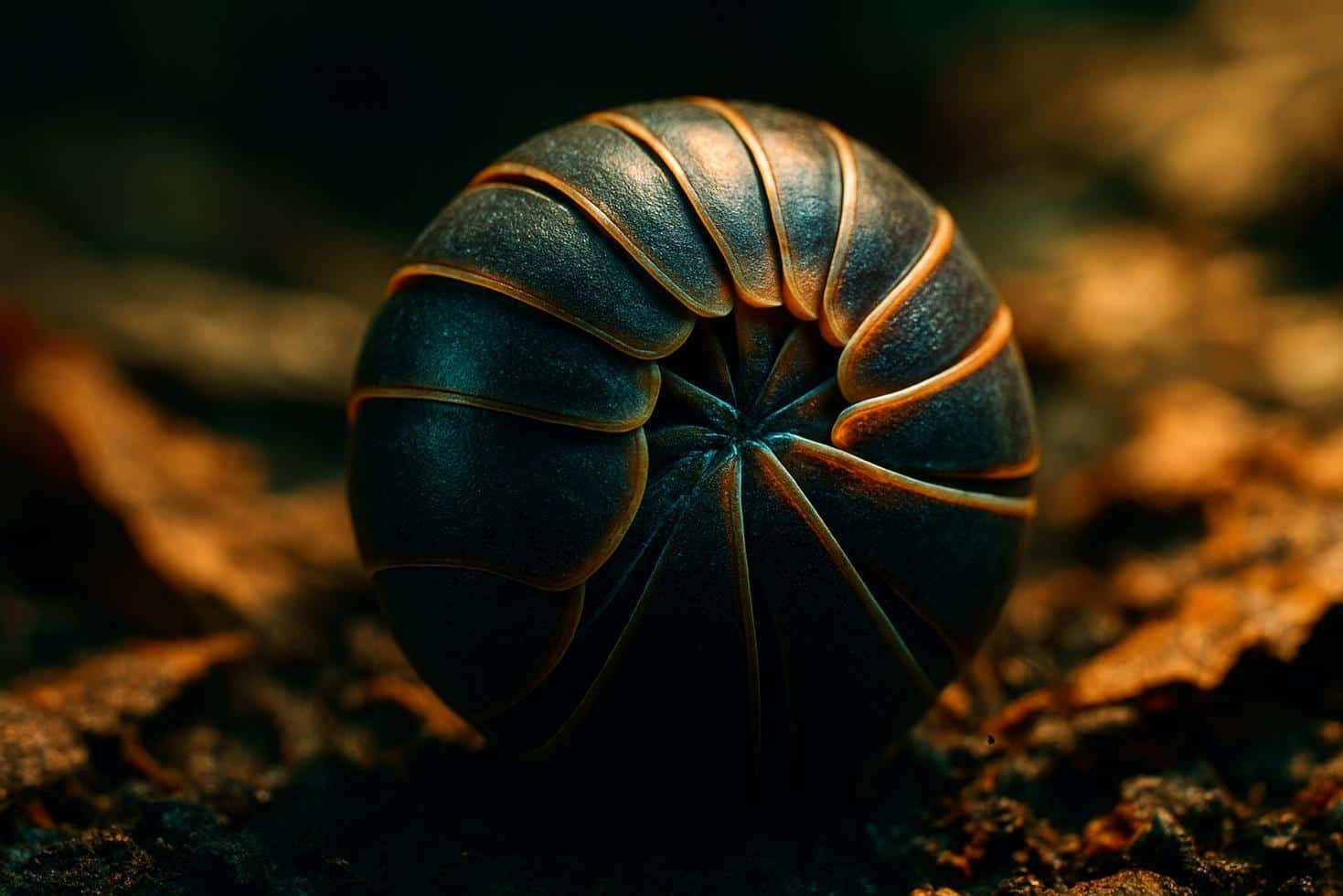
Pillbugs breathe through gill-like structures — and females carry 100–200 eggs in a fluid-filled brood pouch. The most ocean-like creature in the garden never touches water.
The pillbug is not an insect. It is a crustacean — a terrestrial isopod more closely related to shrimp, crabs, and lobsters than to any beetle or fly. That roly-poly creature tucked under a damp log belongs to the order Isopoda, the same ancient lineage that dominates the ocean floor.
What makes this stranger still: it breathes through gill-like structures tucked under its body. Without damp soil, those gills stop working. A shrimp pulled from the sea and a pillbug pulled from dry pavement face the same basic problem.
How Pillbug Gill Breathing Works on Dry Land
Pillbugs carry ocean biology into a terrestrial world. Their gill-like structures require moisture to function — which is why they cluster under logs, stones, and leaf litter where humidity stays high.
The familiar roll-up defense is directly connected to this biology. Rolling tucks the soft gill side inward, armor-plated exoskeleton facing out — protection and moisture retention in one movement.
This is not a designed strategy. It is the result of a body plan inherited from aquatic ancestors, functioning just well enough on land to survive.
The Soil Nutrient Cycling Role Pillbugs Actually Play
Pillbugs are detritivores. They chew through dead leaves, rotting bark, fungi, algae, and fallen plant material — breaking down matter that most organisms cannot process efficiently.
That breakdown step matters. Nutrients locked inside dead organic matter stay inaccessible to plant roots until something shreds and digests the material first. Pillbugs accelerate that release cycle by fragmenting debris and cycling minerals back into the soil.
UC IPM notes they are important decomposers of organic matter, though they can occasionally feed on seedlings or low-hanging fruits in contact with damp soil.
Pillbug Reproduction and Lifespan
Females brood eggs in a fluid-filled pouch — a structure functionally similar to the brood pouches of aquatic crustaceans. Eggs hatch roughly 3–4 weeks after being laid. Young may remain in the pouch an additional 1–2 weeks before emerging as miniature adults.
From there, young pillbugs molt every 1–2 weeks over several months before reaching full size. Adults can live 2–5 years — a long run for something this small.
Closing
The garden’s most misidentified creature is also one of its most useful. Spending years methodically shredding dead matter into something roots can actually use, the pillbug runs ancient ocean software at ankle height.
The rolling is just the part that’s easy to see.
Frequently Asked Questions
Are pillbugs harmful to gardens?
Pillbugs primarily eat decaying organic matter, making them beneficial decomposers. They can occasionally damage seedlings, new roots, and fruits or vegetables touching damp soil.
Do pillbugs bite?
No. Pillbugs are harmless to humans and do not bite or spread disease.
How long do pillbugs live?
Adults can live 2–5 years according to UC IPM, though University of Kentucky estimates a typical lifespan of around 3 years.
Why do pillbugs need moisture?
Their gill-like breathing structures require moisture to function. Without it, gas exchange stops and the animal cannot survive.