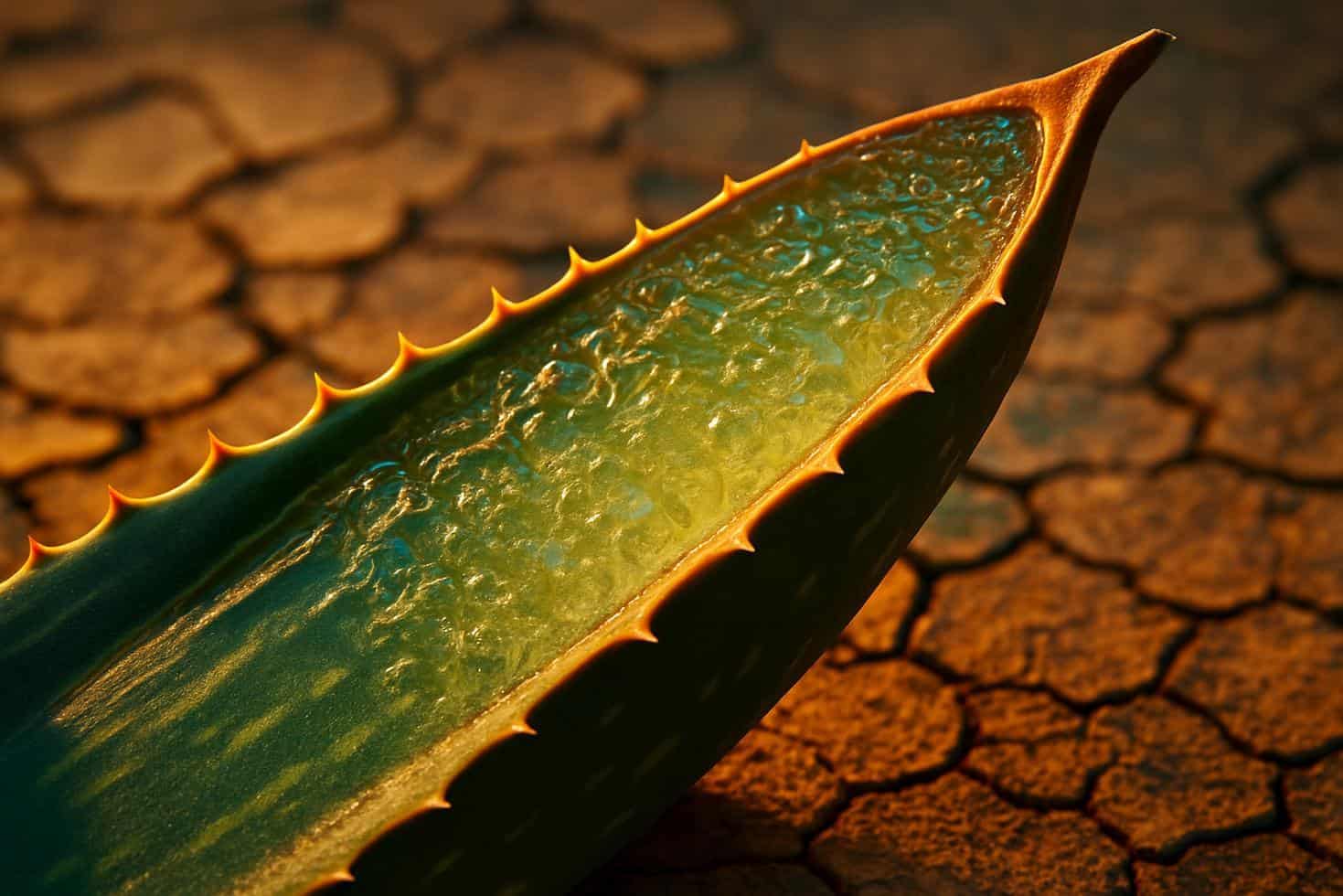
Aloe vera gel runs 98–99.5% water — yet that water carries over 75 documented bioactive compounds, and more than 60% of the solid fraction is polysaccharides packed into less than 1% of the leaf’s total weight.
Aloe vera leaf gel is approximately 99% water by mass, with the remaining solid fraction — just 0.5–1% of fresh weight — containing over 75 described bioactive compounds. That fraction includes the polysaccharide acemannan, enzymes, amino acids, saponins, and organic acids. The numbers make it one of the more concentrated natural biochemical mixtures found in a single plant tissue.
The plant didn’t build any of this for human benefit. In arid environments, a cracked aloe leaf faces immediate microbial invasion and water loss. The gel seals the wound, resists microbes, and stabilizes the tissue. That it also triggers repair responses in human cells is a consequence of shared biology, not plant intention.
What Acemannan Actually Does Inside the Gel
Acemannan is an acetylated glucomannan — a long-chain sugar molecule built primarily from mannose units with acetyl groups attached. It is the dominant polysaccharide in aloe gel and forms the largest single component of the solid fraction.
Studies describe acemannan stimulating macrophage activity and enhancing fibroblast function, two cell types central to wound repair. Acemannan activating macrophage and fibroblast response is the mechanism most consistently cited in the wound-healing literature. It also modulates inflammation rather than simply suppressing it — a distinction that matters when the goal is repair, not just symptom reduction.
How the Full Solid Fraction Works Together
Acemannan doesn’t operate alone. The 0.5–1% solid fraction includes saponins at roughly 3% of that fraction, contributing antiseptic and cleansing properties. Vitamins A, C, and E provide antioxidant activity that supports tissue stability. Malic acid — the dominant organic acid — shapes the gel’s pH, measured around 5.24 in fresh samples.
Aloe gel also contains approximately 20 of the 22 human-used amino acids, including seven of the eight essential ones, providing raw material for new tissue. These components work in parallel, not in a coordinated sequence.
Why the Plant Produces This Chemistry
Aloe vera uses CAM photosynthesis and stores water in thick, fleshy leaves — both adaptations to arid conditions. When a leaf is damaged, the gel physically seals the wound while the bioactive compounds resist microbial colonization and stabilize injured tissue.
The chemistry serves the plant’s survival. The fact that acemannan triggers immune and repair responses in human tissue reflects how conserved certain biological signaling pathways are across species. That’s a detail about evolutionary biology, not about the plant’s purpose.
Frequently Asked Questions
What exactly is acemannan?
Acemannan is an acetylated glucomannan — a long-chain polysaccharide made primarily of mannose — and is the dominant bioactive compound in aloe vera gel’s solid fraction.
How much of aloe vera gel is actually water?
Multiple studies place water content between 98% and 99.5% of fresh gel weight, with one measurement at 99.32% and another source citing 99.5% for the inner mucilage specifically.
Does aloe vera gel kill bacteria?
Components including saponins and phenolic compounds show bacteriostatic or bactericidal activity against certain strains in laboratory settings, but efficacy is strain-specific and not comparable to systemic antibiotics.
What percentage of aloe’s solid fraction is polysaccharides?
More than 60% of the dry matter in aloe vera gel consists of polysaccharides, predominantly acemannan, according to multiple compositional analyses.