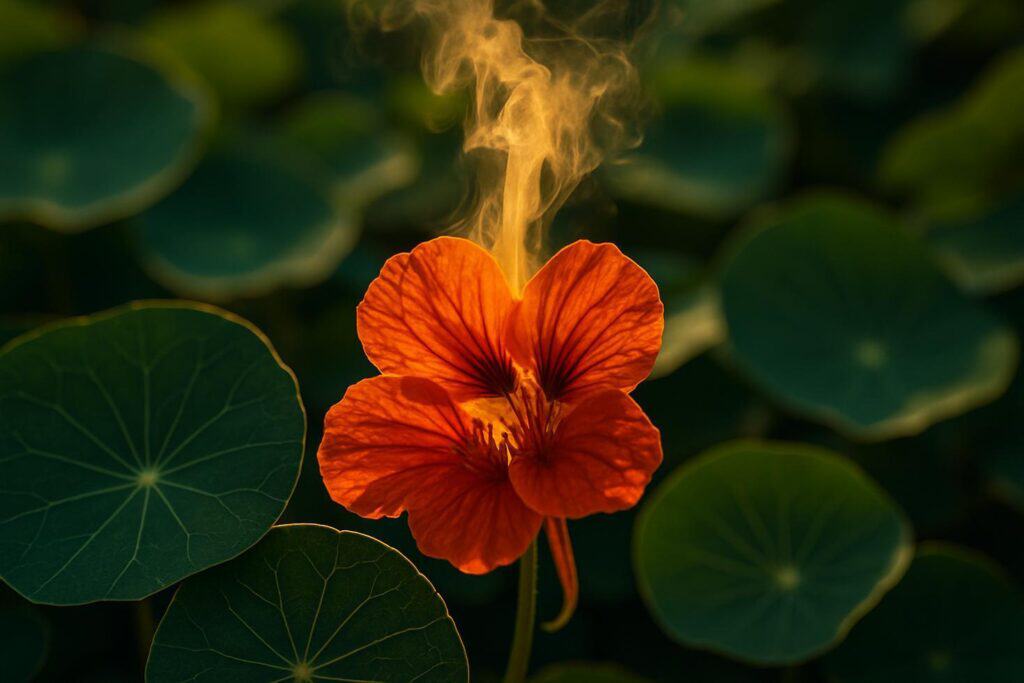
Nasturtium runs glucosinolate chemistry through every leaf, flower, and seed pod — the same sting that hits the tongue is the mechanism that turns away aphids, whiteflies, and cabbage loopers.
Tropaeolum majus, the common garden nasturtium, defends itself with glucosinolate compounds — the same sulfur-based chemical family found in mustard and horseradish. What makes this South American annual genuinely strange is that the defense system is also the flavor. The chemistry did not split into two functions. It simply ended up serving two audiences.
Every part of the plant carries it. Leaves, flowers, and immature seed pods all contain the same compound. When an insect breaks the leaf surface, the damage triggers a release of that sharp, sulfur-based sting. Most aphids, whiteflies, and cabbage loopers respond by leaving.
How Nasturtium’s Glucosinolate Defense Mechanism Works
Glucosinolates are not active until the plant tissue is damaged. The compounds sit in the cell separately from the enzyme that activates them. Tissue damage triggers enzyme and compound contact, which produces the pungent, sulfur-bearing result. The pest gets a mouthful of chemical deterrent rather than a neutral meal.
This two-part storage system is common across the Brassicaceae family — think mustard, horseradish, and wasabi. Tropaeolum majus sits outside that family but runs the same chemical logic.
Why Nasturtium Is Both a Pest Deterrent and an Edible Ornamental
The plant did not develop a softer version of its chemistry for human consumption. The glucosinolates are present in the same concentration whether a gardener is harvesting flowers for a salad or an aphid is testing a leaf edge. Humans simply developed a tolerance for the bite — and in high-end culinary contexts, a preference for it.
Oregon State University, the RHS, and multiple integrated pest management sources all describe Tropaeolum majus as an edible ornamental useful in companion planting for pest suppression. The flowers are visually striking on a plate. The leaves carry the peppery sharpness that makes them a horseradish substitute in some preparations.
The same mechanism that makes the plant difficult for insects to exploit is the quality that made it interesting to cooks. That is not a contradiction. It is the same compound doing what it has always done.
Closing
Nasturtium offers no chemical compromise. It runs its defense at full strength through every part, and what lands on a restaurant plate is the weapon itself. A plant that repels pests and earns a spot in the salad bowl — without adjusting its chemistry for either audience — is worth paying attention to.
Frequently Asked Questions
What chemical makes nasturtium taste peppery?
Glucosinolates — sulfur-based compounds also found in mustard and horseradish — produce nasturtium’s sharp, peppery flavor.
Which pests does nasturtium repel?
Horticultural and integrated pest management sources identify aphids, whiteflies, and cabbage loopers as pests nasturtium is noted to deter.
Are all parts of nasturtium edible?
Yes. Leaves, flowers, and immature seed pods of Tropaeolum majus are all edible and carry the same peppery glucosinolate flavor.
Does cooking destroy the pest-repelling compounds in nasturtium?
The Raw_Research provided does not include confirmed data on heat degradation of nasturtium glucosinolates; that question remains outside what the verified sources address.