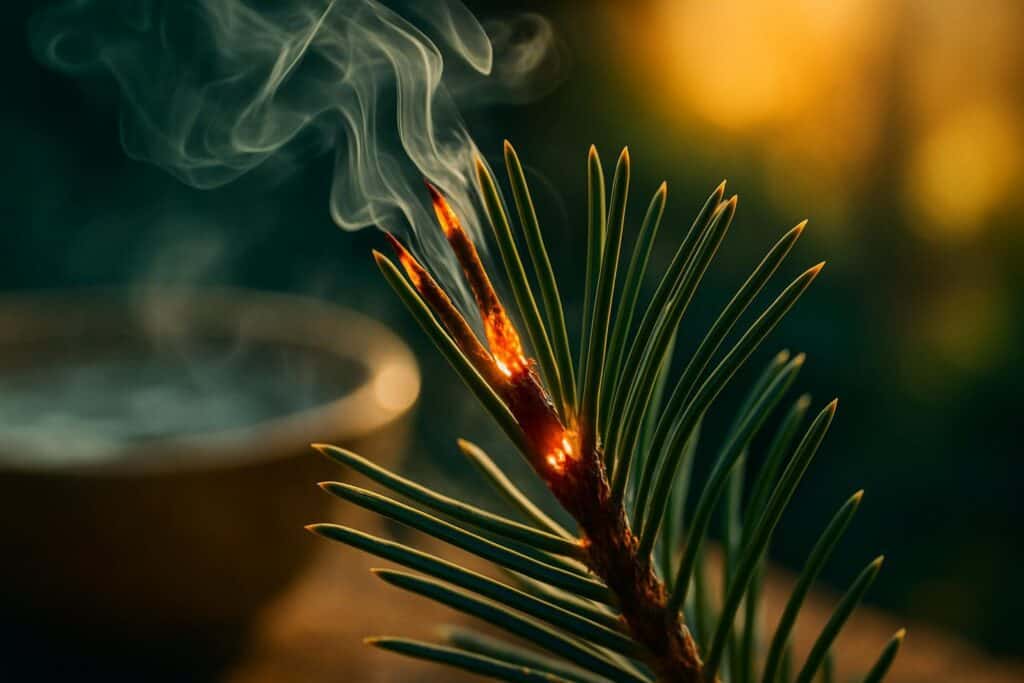
Pine needles release their volatile compounds in the first 30–60 seconds of boiling — then simmer for hours, wave after wave, as long as the water stays warm.
Heating pine needles in water releases the tree’s stored volatile aromatic compounds — terpenes, pinene, limonene — directly into the air. That’s the chemistry. Everything else is atmosphere.
These molecules are genuinely small and light enough to drift across a room and register as scent. They weren’t stored for a living room. The tree built them across years as a defense against insects, fungi, and heat stress. Heat just gives them a way out.
How Pine Needle Volatile Chemistry Works When Heated
Pine needles concentrate aromatic compounds in resin ducts built into the needle’s tissue. When water reaches a boil, heat disrupts the resin structure, freeing those molecules into steam. Reducing to a low simmer sustains that release continuously — sources recommend checking the pot every 30–60 minutes to maintain water level.
The result is a forest-like scent that can fill a room for hours, not because of any purifying action, but because volatile molecules disperse outward from high concentration to low.
What the Science Does — and Doesn’t — Support
The fragrance release is real and well-documented. What isn’t supported is the leap from “this smells like a forest” to “this cleans the air.” No controlled evidence in the available sources shows that simmered pine water disinfects surfaces, reduces airborne mold, deters insects, or delivers measurable immune support.
The vinegar-infusion DIY cleaner recipe — pine needles steeped 2–6 weeks, strained, diluted 50/50 — is described as a deodorizer in multiple how-to sources. But those sources offer no controlled data on surface disinfection or antimicrobial efficacy beyond the scent.
The aromatherapy angle is plausible. Pine scent from volatile compounds is genuinely present in the air. Whether that translates to measurable mood or cortisol effects isn’t quantified by any source here.
Using Pine Needle Simmer Safely and Effectively
The practical method is straightforward: bring needles to a brief boil, reduce heat, and maintain a low simmer. Keeping the pot half to three-quarters full of water keeps steam generating steadily.
Add-ins like orange peel, cinnamon sticks, star anise, or bay leaves each contribute their own volatile compounds. The mix stays aromatic longer because different compounds release at slightly different rates.
One consistent safety note across sources: use only verified true pine species. Yew and some evergreen lookalikes are not safe to heat in water for inhalation purposes.
Pine simmered on a stovetop is simply a piece of the tree’s chemical life story, drifting through an indoor room. The forest didn’t move inside. The chemistry did.
Frequently Asked Questions
Why do pine needles smell when heated?
Heat disrupts the resin structures inside the needle, releasing stored volatile compounds — terpenes, pinene, limonene — into the air as steam carries them outward.
How long do simmered pine needles stay fragrant?
Sources describe several hours of continuous scent release when needles are kept at a low simmer after an initial brief boil.
Do simmered pine needles actually purify or disinfect the air?
No controlled evidence supports air purification, disinfection, or mold removal from simmered pine water; the verified effect is fragrance release only.
Which pine species are safe to simmer indoors?
Sources recommend using only true pine species and specifically warn against yew and non-pine evergreen lookalikes.