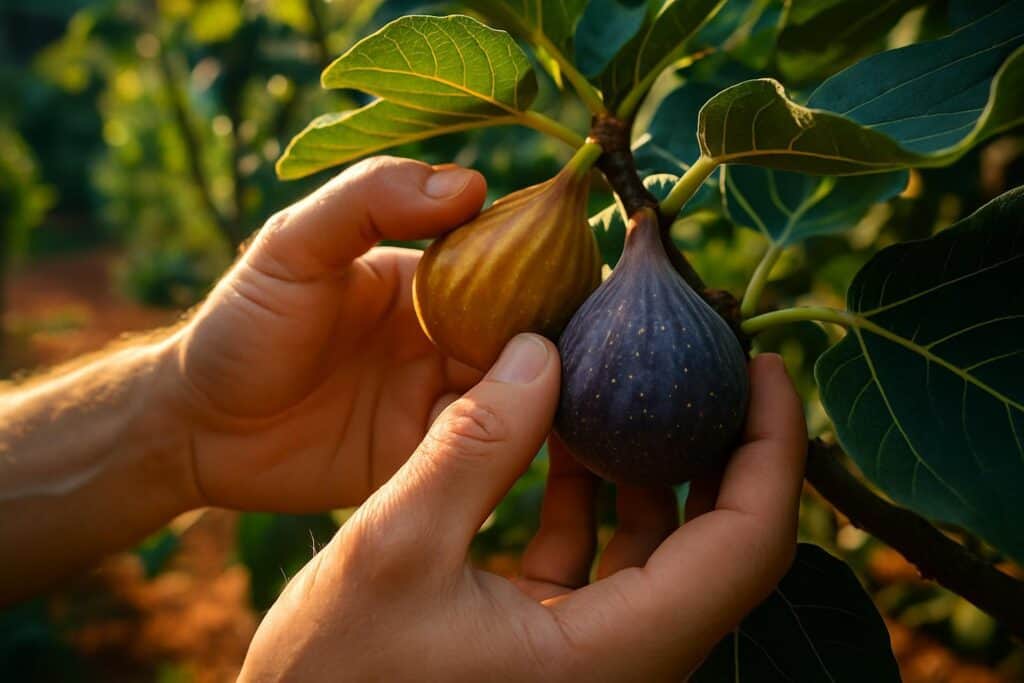
A former pecan farm in southeast Atlanta now holds 2,500 pesticide-free plants across 7.1 acres — and anyone can walk in and harvest food for free.
The Browns Mill Food Forest in Atlanta’s Lakewood-Browns Mill neighborhood is widely documented as the largest public food forest in the United States. It sits four miles south of Atlanta’s city center, on land that once functioned as a small family farm and later sat vacant.
More than one-third of the surrounding community lives below the poverty line. The USDA Forest Service helped fund the project specifically to reduce that food desert, contributing roughly $86,000 — about half the initial land costs — through its Community Forest Program.
How the Food Forest Layers Plants to Feed People Across Seasons
A food forest mimics a natural woodland by stacking plantings at different heights. Canopy trees, understory shrubs, herbaceous plants, vines, and root crops all occupy different vertical zones, which means different species ripen on different schedules.
The site already held pecan trees, black walnut trees, muscadine grapes, and blackberry brambles when the project began. Planners layered additional edible species — figs, persimmons, blueberries, pawpaws, herbs, and mushrooms — into that existing structure.
Layered perennial roots build soil without tilling, cycling nutrients back through organic matter rather than depleting the ground the way annual monocultures do. The USDA notes this agroforestry approach creates more productive, ecologically resilient land compared with conventional open-field agriculture.
Browns Mill’s Scale, Timeline, and What “Largest Public Food Forest” Actually Means
The Conservation Fund purchased the vacant 7.1-acre parcel in 2016, and the City of Atlanta later paid the Fund $157,384 for the land. The city formally opened the food forest inside Browns Mill Park in early 2021.
As of the project’s 2021 reporting, roughly two and a half acres had been fully activated with food forest plantings. The remaining acreage is being developed in phases according to a master plan, with ongoing reassessment of community needs.
Multiple sources — The Conservation Fund, Modern Farmer, Agritecture, and GOOD Magazine — describe it as the largest public or municipal food forest in the country. Modern Farmer adds the qualifier “believed to be,” acknowledging that no larger free-harvest public food forest has been documented, but that comprehensive national comparison data remain limited.
Closing
What started as a regulatory and land-access problem — Atlanta prohibited growing food on residential lots until 2014 — has turned into a functioning commons on seven acres. The pecan roots were already there. Everything else got layered on top.
The city’s stated goal is to bring healthy food within half a mile of 85 percent of Atlanta residents. Browns Mill is the most visible proof that the infrastructure for that goal can grow out of soil that was already productive.
Frequently Asked Questions
How many plants grow at Browns Mill Food Forest?
Modern Farmer reports 2,500 pesticide-free plants and mushrooms growing on site, including fruits, vegetables, nuts, herbs, and edible fungi.
Is it really free to harvest food at Browns Mill?
Yes. GOOD Magazine and Modern Farmer both confirm the food forest is open to the public free of charge, with no payment or formal allotment required to harvest.
Who manages Browns Mill Food Forest?
Atlanta’s Department of Parks and Recreation manages and maintains the site, working alongside more than 1,000 volunteers and partners including Trees Atlanta and The Conservation Fund.
Was the land always used for food production?
The site was a small family farm — described in multiple sources as a former pecan farm — before becoming vacant land. The pecan orchard, black walnut trees, and muscadine grapes on the site predate the food forest project.