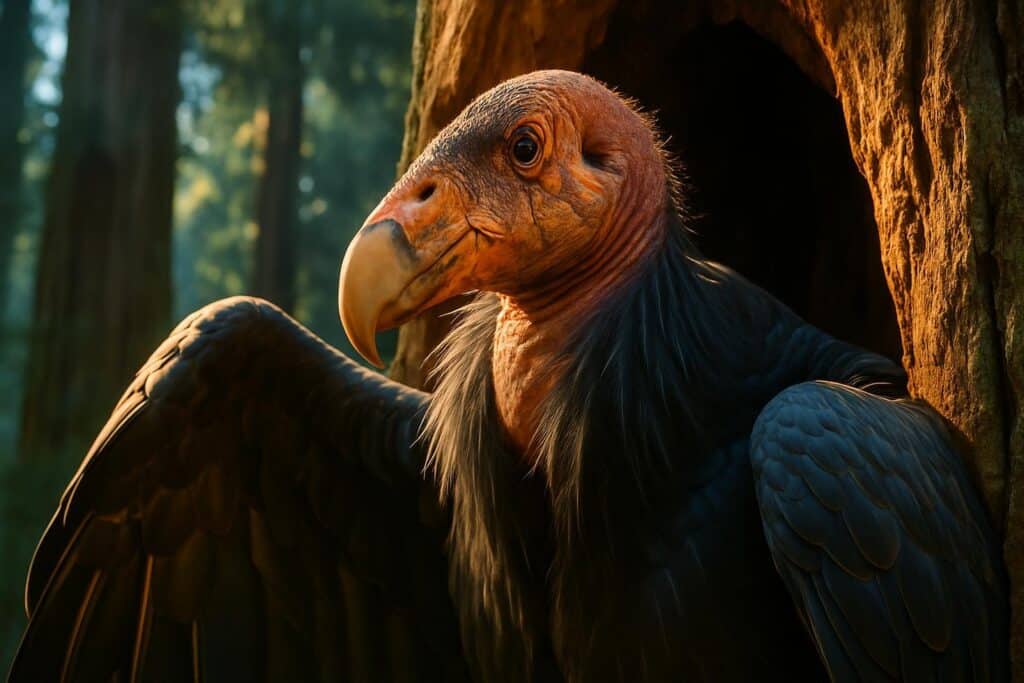
A bloodline that shrank to 22 birds in 1982 has now produced a confirmed egg in Pacific Northwest old-growth redwood — the first in more than a century.
A California condor egg was confirmed in a Pacific Northwest redwood forest, marking the first documented nesting attempt in the region in over 100 years. The pair responsible descended from a captive population that, at its lowest point in 1982, numbered just 22 individuals — every California condor then alive on Earth.
That number is worth sitting with. Twenty-two birds. Wildlife managers made the call to pull every last one from the wild and begin a captive breeding program, a gamble with no guaranteed outcome. The Yurok Tribe reintroduced condors to the Northern California coast in 2022, returning the species to territory it once occupied as a regular presence.
How the California Condor’s Range Once Included Pacific Northwest Redwoods
The condor’s historic range stretched from British Columbia south through Baja California. That range included coastal redwood forests, where the birds filled a specific ecological role: consuming beached marine mammals, bear carcasses, and salmon carcasses left after spawning runs.
Condors moving marine nutrients into forest interiors is a function that disappeared from this landscape when the birds vanished. Salmon carcasses carry ocean-derived nutrients deep into river corridors. A condor carrying those nutrients further inland — into the canopy zones of old-growth stands — connects marine and terrestrial systems in a way few other animals replicate.
What the 1982 Capture Decision Looked Like and What Followed
By 1982, the wild population had collapsed to 22 birds. Wildlife managers captured all of them. The reasoning was direct: the wild population was declining faster than it was reproducing, and captive breeding offered the only path that preserved genetic material at all.
The program worked, slowly. Captive breeding expanded the population over subsequent decades. Reintroduction efforts began in California and the Southwest before the Yurok Tribe’s 2022 effort brought the species back to the Pacific Northwest coast — the first condors on that landscape in generations.
What a Confirmed Egg in Old-Growth Redwood Actually Represents
The confirmed egg is the downstream result of every decision made since 1982. It is also a data point the recovery trajectory did not guarantee. Nest success in reintroduced condor populations depends on factors including lead exposure from spent ammunition in carcasses, available food sources, and pair behavior.
The old-growth redwood setting matters ecologically. These trees create cavity and ledge nesting structures that condors use. The forest’s carcass base — including salmon — provides the caloric foundation the birds need to sustain a nesting attempt.
The egg exists because the math was forced to change.
Frequently Asked Questions
When did the Yurok Tribe reintroduce condors to the Pacific Northwest?
The Yurok Tribe began reintroducing California condors to the Northern California coast in 2022.
How many California condors were left in 1982?
Only 22 birds remained, and all were captured from the wild to begin a captive breeding program.
What did condors eat in coastal redwood forests historically?
They scavenged salmon carcasses, beached marine mammals, and large terrestrial animal carcasses.
Why does old-growth redwood habitat matter for condor nesting?
Old-growth trees provide the ledge and cavity structures condors use as nest sites, alongside the prey base the surrounding landscape supports.