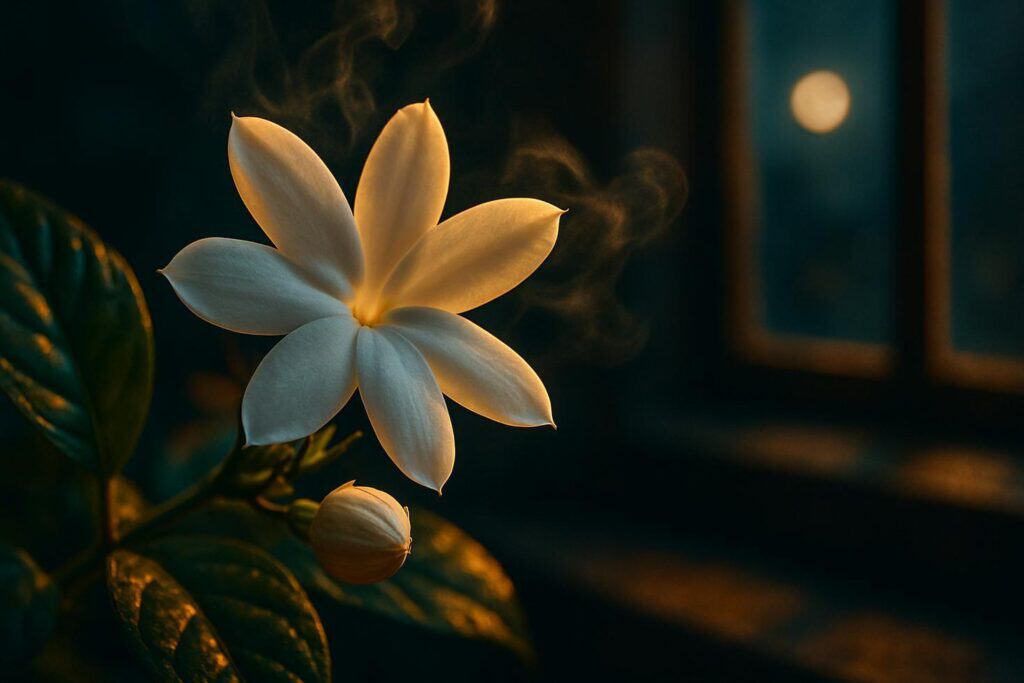
Jasmine fragrance potentiated GABA activity more than fivefold in lab tests — and a 2022 room study found 12% deeper Stage N3 sleep in jasmine-scented rooms versus controls. One plant. No prescription.
Jasminum sambac releases volatile organic compounds that potentiate GABA — the brain’s primary inhibitory neurotransmitter — by more than fivefold in laboratory conditions. That is the same neurotransmitter system that pharmaceutical sedatives target, though the precise receptor subtypes jasmine activates appear to differ from those targeted by drugs like zolpidem. The mechanism runs through the nose, not the stomach.
Researchers at Ruhr University Bochum found specific jasmine fragrances produced sedative-like effects in cellular and animal models “as powerful as some pharmaceutical drugs.” A separate 2022 room study found participants sleeping in actively flowering Jasminum sambac rooms recorded 12% deeper Stage N3 sleep — the slow-wave phase where the brain clears metabolic waste and consolidates memory.
How Jasmine VOCs Interact with the Brain’s GABAergic System
Jasmine’s airborne molecules enter through the nasal cavity and activate olfactory receptors. Signals travel to the limbic system — the brain’s emotional and autonomic hub — and from there can modulate the hypothalamic-pituitary-adrenal axis. Ruhr University Bochum research, published in the Journal of Biological Chemistry, documented that certain jasmine fragrances amplified GABAergic inhibitory activity more than fivefold in vitro.
jasmine potentiates GABA, not mimics a drug — the distinction matters. Zolpidem binds specific GABA-A receptor subtypes at the benzodiazepine site. Current research does not confirm jasmine VOCs bind those same subtypes or match that pharmacokinetic profile. What the data does show is meaningful potentiation of inhibitory neurotransmission through inhalation alone.
What the 2022 Room Study and Wheeling Jesuit Research Actually Showed
The 2022 study summarized by Alibaba LifeTips placed participants in rooms with actively flowering Jasminum sambac. Results showed 12% deeper Stage N3 sleep and 18% longer REM latency compared to control rooms, without sedative side effects reported. Separately, Wheeling Jesuit University psychologist Bryan Raudenbush found that jasmine-scented sleep environments produced reduced sleep movement, greater sleep efficiency, and improved next-day alertness and cognitive test performance.
Neither study reported a 30% reduction in sleep onset time — that figure does not appear in any verified source and should be treated as unconfirmed. The verified picture is more modest, and still genuinely interesting: measurably deeper sleep and improved waking function from a scented room.
Closing
Jasminum sambac has been running its nighttime chemistry long before anyone built a bedroom around it. What makes it interesting is not mysticism — it is a documented interaction between airborne plant compounds and a neurotransmitter system humans already carry. The numbers are real, if smaller than the headlines sometimes claim. A subtle fragrance from a healthy, flowering plant. A measurable shift in how deeply the brain sleeps. That is worth sitting with.
Frequently Asked Questions
Does jasmine scent actually affect GABA in humans?
Lab studies confirm more-than-fivefold GABA potentiation in vitro, and animal models show sedative effects; direct human receptor-binding data is not yet published in these studies.
Is jasmine fragrance as strong as Ambien for sleep?
Researchers describe the potency as comparable to certain pharmaceuticals in cellular and animal models, but jasmine VOCs do not appear to bind the same GABA-A receptor subtypes as zolpidem.
How much jasmine scent is needed for sleep effects?
Sources recommend subtle, localized fragrance — one compact potted Jasminum sambac in a bedroom. Pervasive or concentrated scent may cause respiratory disruption rather than sedation.
Is Jasminum sambac safe to keep in a bedroom?
Alibaba LifeTips and multiple horticultural sources confirm Jasminum sambac contains no harmful compounds and is considered appropriate for indoor bedroom placement.