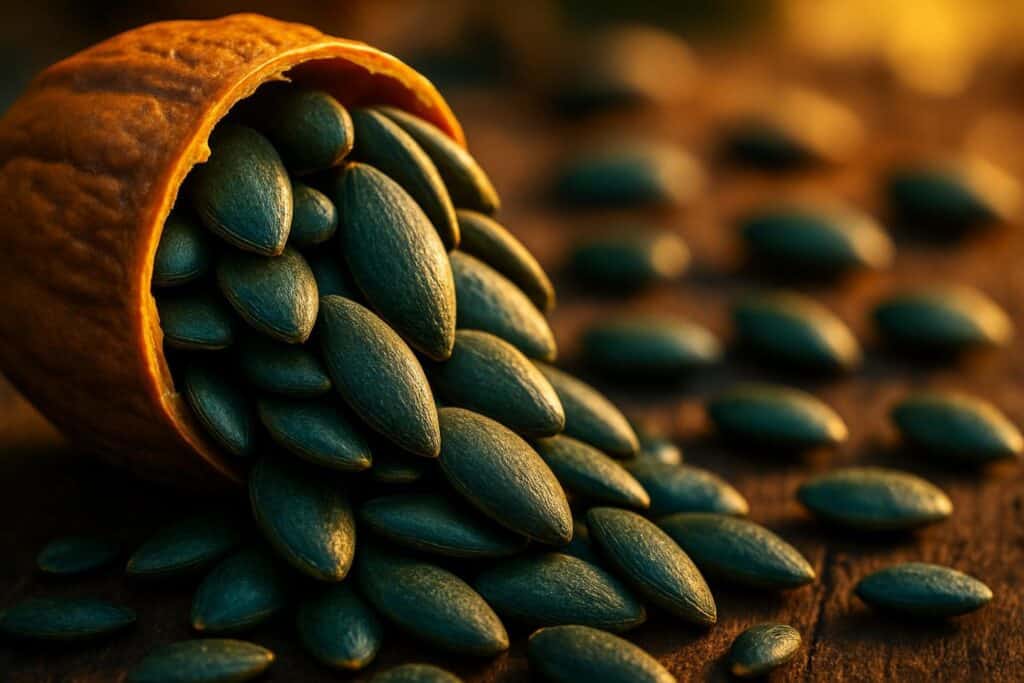
One ounce of pumpkin seeds delivers 2.2 mg of zinc — about 20% of the daily value for men. Oysters concentrate zinc at a level pumpkin seeds cannot match. But seeds show up on a Tuesday.
One ounce of pumpkin seeds contains approximately 2.2 mg of zinc, representing roughly 20% of the 11 mg daily requirement for adult men. That figure is independently confirmed by pharmacy and nutrition sources and aligns with a concentration of about 7.8 mg zinc per 100 g of seeds. It is not a dramatic headline, but it is a reliable one.
The body cannot stockpile zinc the way it stores iron or calcium. Cells need a steady incoming supply to divide correctly, heal wounds, and mount immune responses. That makes consistency of intake meaningful — and pumpkin seeds are one of the more portable, shelf-stable ways to deliver it.
What the Zinc Content of Pumpkin Seeds Actually Looks Like
The 2.2 mg per ounce figure comes from multiple independent sources using comparable methodology. Zinc concentration of roughly 7.8 mg per 100 g is the number those sources converge on. Some commercial listings have reported values as high as 7.8 mg per single 28 g serving — a figure that would imply nearly 28 mg per 100 g. That conflicts sharply with every credible source and almost certainly reflects a measurement error or mislabeling.
The honest number is the conservative one: 2.2 mg per ounce.
Why Oysters Carry Far More Zinc Than Pumpkin Seeds
Oysters filter seawater continuously, and zinc concentrates in their tissue as a byproduct of that process. Standard nutrition references place cooked Eastern oysters in the range of 25–30 mg of zinc per 100 g — three to four times higher than pumpkin seeds by weight. A single medium oyster can contain more zinc than a full ounce of seeds.
Pumpkin seeds are not in the same category. The comparison isn’t a close race — oysters represent one of the most zinc-dense foods in the human diet by any measure.
Frequently Asked Questions
How much zinc is in a serving of pumpkin seeds?
One ounce (28 g) of pumpkin seeds provides approximately 2.2 mg of zinc, or about 20% of the 11 mg daily value for adult men.
Are pumpkin seeds a good plant-based source of zinc?
Yes. At roughly 7.8 mg zinc per 100 g, pumpkin seeds rank among the more concentrated plant-based options, though they fall well below oysters and other shellfish.
How do pumpkin seeds compare to oysters in zinc?
Oysters typically provide 25–30 mg of zinc per 100 g — roughly three to four times the concentration found in pumpkin seeds.
Why does the body need zinc daily?
The body has no dedicated zinc storage system, so wound healing, immune function, and cell division all depend on consistent daily intake from food.