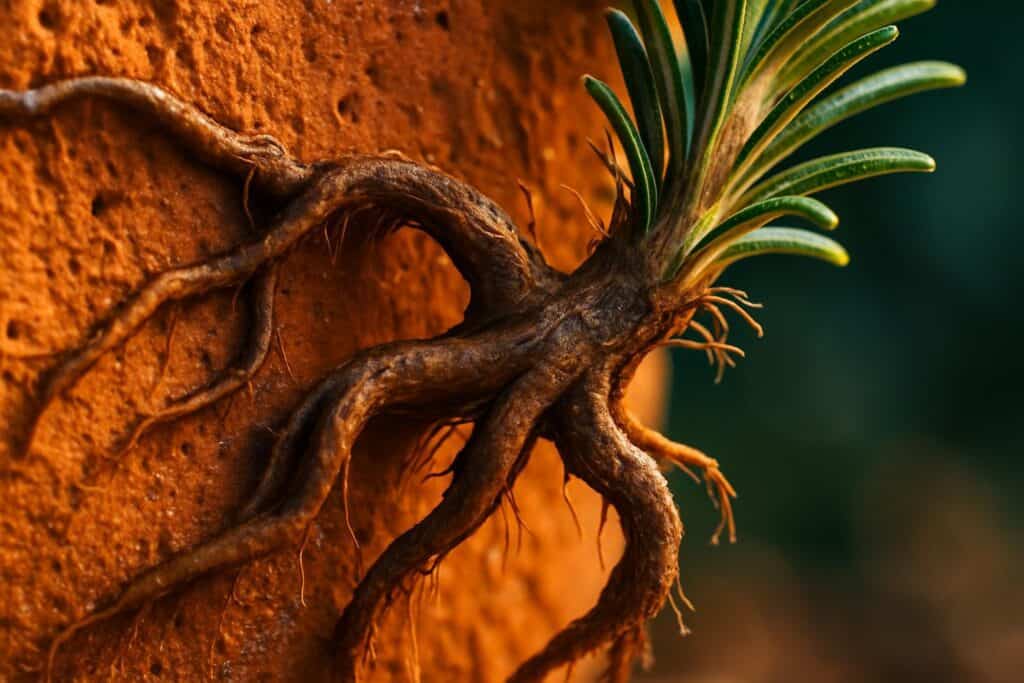
Terra cotta loses water 2.3 times faster than plastic — not from the surface, but through millions of pores baked into the clay wall itself, pushing oxygen inward the whole time.
Unglazed terra cotta pot walls are not passive containers — they are porous ceramic membranes that move both water vapor and gas continuously through their walls via capillary action and diffusion. That distinction matters enormously for what happens inside the root zone. A pot that looks like a simple clay cylinder is, mechanically, doing something a plastic pot wall cannot do at all.
The pores baked into terra cotta during firing at roughly 900–1050°C measure approximately 0.5–5 micrometers in diameter. After watering, water from saturated soil migrates into those capillaries, travels outward through the wall, and evaporates from the outer surface. As that water moves out, oxygen from the surrounding air diffuses inward through the same pore network toward the roots.
How Capillary Action Moves Water Through Terra Cotta Walls
Water moves from the wetter soil zone adjacent to the inner wall into the drier clay matrix, then continues outward to the pot’s exterior surface. This is straightforward capillary movement along a moisture gradient, not active pumping.
The visible dampness on the outside of a watered terra cotta pot is a direct demonstration of this process. Water migrating from soil through fired clay is what cools the pot surface and lowers substrate temperature around the root zone through evaporative cooling.
Gas Diffusion Through Terra Cotta and What It Means for Root Zone Oxygen
As water vapor moves outward through the pore network, oxygen from ambient air diffuses inward through those same passages. Carbon dioxide produced by root respiration diffuses outward by the same mechanism.
This sidewall gas exchange supplements — it does not replace — the gas exchange that occurs at the soil surface. For rosemary, which originates in thin, rocky Mediterranean soils where drainage and air movement through the substrate are constant, terra cotta’s radial oxygen diffusion pathway more closely replicates native root-zone conditions than a sealed plastic wall does.
Practical Consequence: What Faster Drying Actually Costs
The same porosity that aerates roots also means terra cotta pots demand more frequent watering than plastic or glazed ceramic containers. A dry terra cotta pot also draws moisture aggressively from fresh potting soil before roots can access it. Pre-soaking new pots for one hour to overnight saturates the clay pores first, reducing that initial moisture pull from the root zone.
LifeTips flags that if drying is too rapid — particularly above 25°C with more than two days between waterings — salt concentration and osmotic stress can develop, a different failure mode than root rot but still harmful.
Terra cotta’s engineering is straightforward physics: capillary gradients and diffusion through a fired ceramic matrix. The mechanism that makes it useful for rosemary and other Mediterranean plants existed long before anyone described it in those terms.
Frequently Asked Questions
Why do terra cotta pots get damp on the outside after watering?
Water from saturated soil migrates through the clay’s capillary pores and reaches the outer wall surface, where it evaporates into the surrounding air.
Does terra cotta actually prevent root rot?
It reduces the risk by shortening how long soil stays saturated, but porosity does not eliminate root rot if overwatering is severe enough.
Why soak a new terra cotta pot before planting?
A dry terra cotta wall actively pulls moisture out of fresh potting soil; soaking the pot for one hour to overnight pre-saturates the pores and reduces that initial draw.
Is rosemary a good match for terra cotta pots?
Multiple horticultural sources list rosemary among Mediterranean herbs adapted to rocky, fast-draining soils — the same dry, aerated root-zone conditions terra cotta mimics better than plastic.