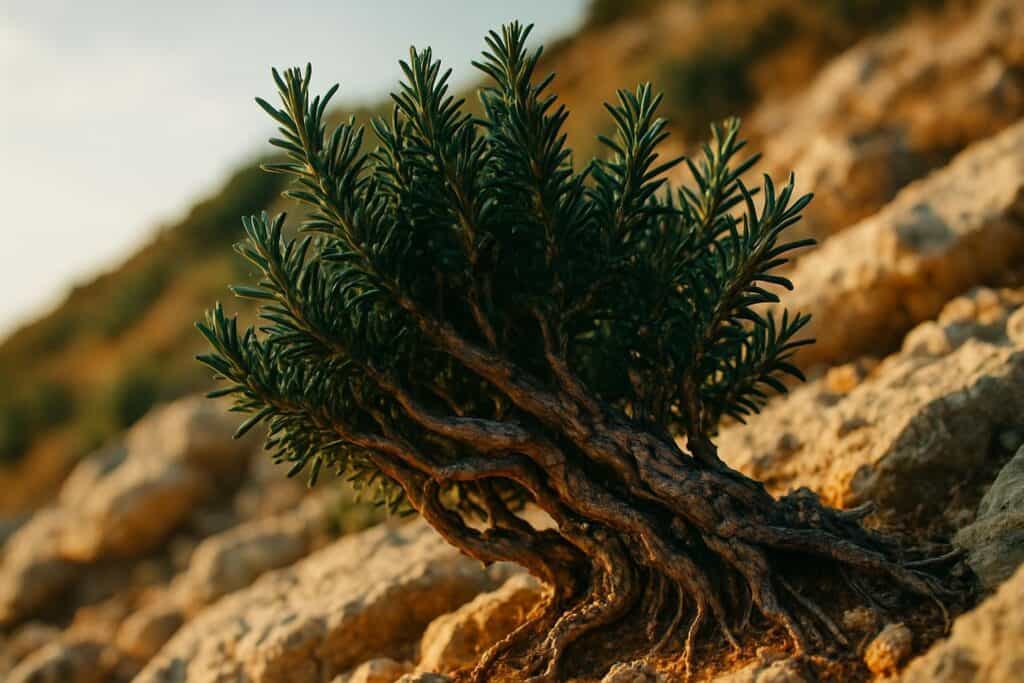
A rosemary plant sold in a 4-inch pot is a woody shrub that reaches 4–6 feet tall in its native Mediterranean habitat — confined to roughly one-third the container depth it actually needs.
Rosemary (Salvia rosmarinus) is botanically an evergreen perennial shrub in the mint family, not a soft-stemmed herb like basil. University of Wisconsin Extension describes it explicitly as a woody shrub native to the rocky hills of the Mediterranean, Portugal, and northwestern Spain. That classification changes everything about how the plant behaves on a kitchen windowsill.
In its native habitat, rosemary grows on calcareous, fractured slopes through summers that stay dry for months. The Royal Horticultural Society calls it a “sun-loving Mediterranean shrub” that is drought tolerant once established. The plant’s small, tough leaves, thick cuticle, and xylem tissue resistant to cavitation are all physical adaptations to that reality — not traits that disappear because the pot is small.
Why Rosemary’s Woody Architecture Sets It Apart from Kitchen Herbs
Rosemary stems lignify as the plant matures — that woodiness is not a sign of age or stress, it is normal shrub development. Lignified xylem conducts water under transpiration-driven tension, moving moisture from roots to leaves continuously without requiring saturated soil. Basil and other tender annual herbs have soft, non-woody stems and shallower roots that dry out quickly, which is why they tolerate — and often need — frequent watering. Rosemary’s architecture runs on a completely different schedule.
How a 4-Inch Container Mismatches Rosemary’s Watering Needs
A small pot cannot buffer moisture the way deep Mediterranean soil does. The RHS recommends at least a 30 cm (1 foot) deep container with plenty of drainage holes for long-term rosemary culture. A 4-inch pot (roughly 10 cm) holds a fraction of that root volume, dries out faster, and heats up more dramatically. Light surface misting moistens only the top layer, leaving deeper roots in dry substrate. The correct approach — supported by UC IPM, RHS, and Gardenary — is deep, infrequent watering: soak until water runs from the drainage holes, then allow the soil to dry before the next watering. Once established in the ground, rosemary can go 1.5–2 weeks between waterings.
Rosemary didn’t become fragile by moving indoors. It became misread. A shrub built to outlast months of Mediterranean summer drought simply cannot thrive on care designed for a fast-growing annual.
The plant is the same. Only the container — and the assumptions — got smaller.
Frequently Asked Questions
Is rosemary a herb or a shrub?
Rosemary is botanically an evergreen perennial shrub in the Lamiaceae family, not a soft-stemmed annual herb like basil.
How big does rosemary grow in its natural habitat?
University of Wisconsin Extension documents rosemary reaching 4–6 feet tall on Mediterranean hillsides; in USDA zones 8 and above it grows several feet wide and tall in gardens.
Why does rosemary die on a kitchen windowsill?
Small pots dry out rapidly and promote shallow roots; frequent light misting keeps only the surface wet, while deeper roots stay dry or develop rot from poor drainage and inadequate light.
How often should container rosemary be watered?
Gardenary recommends once weekly for a container plant, watering deeply until water drains from the pot, then allowing the soil to dry before the next watering.