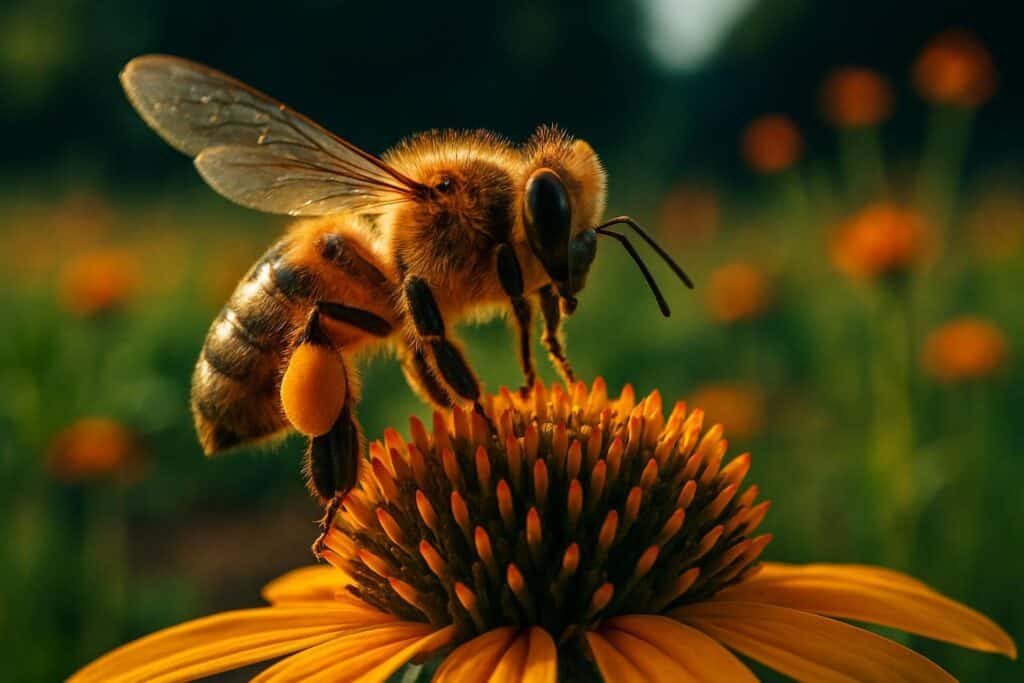
Maryland’s threshold is 10 colonies per acre — meet it, and the state assesses that land the same as a working corn or soybean farm. The hive boxes do what the rows of crops do.
Maryland’s Agricultural Use Assessment allows land supporting 10 or more honeybee colonies per acre to qualify for the same reduced property tax valuation as conventional farmland. That single density threshold is the entire mechanism. No crops, no tractors, no soil tilling required.
Each colony at peak season holds roughly 60,000 bees. Those bees forage up to three miles in every direction, moving pollen between orchards, wildflowers, and neighboring crop fields without a single piece of farm equipment involved.
What Maryland’s Agricultural Use Assessment Actually Does for Beekeeping Land
The Agricultural Use Assessment is a special property tax valuation — not an exemption. It replaces market-rate assessed value with a use-based calculation tied to the land’s agricultural productivity.
For beekeeping operations, the qualifying threshold is density, not acreage total. A landowner who maintains 10 colonies per acre across their parcel meets the statutory threshold and may apply for the agricultural classification.
The land’s physical character doesn’t need to change. A field that looks like open space to a passerby can carry full agricultural assessment status once the colony count per acre is met and verified.
Why Maryland Treats Pollination as Agricultural Labor
Managed honeybee colonies contribute to U.S. crop value not by harvesting anything themselves, but by enabling harvests across surrounding acreage. Maryland’s tax code effectively recognizes that mechanism.
The bees are functioning as the labor force on that land. Pollination services replacing what no tractor provides is the economic logic the assessment reflects. A quiet field of hive boxes is producing an output — just not a visible row crop.
This framing matters because it extends agricultural tax treatment to a land use that traditional assessment frameworks were never written to accommodate.
Frequently Asked Questions
How many honeybee colonies per acre does Maryland require for agricultural assessment?
Maryland requires 10 or more honeybee colonies per acre to qualify land for agricultural use assessment under the state’s special property tax valuation program.
Is Maryland’s agricultural use assessment a tax exemption or a reduced rate?
It is a reduced valuation, not an exemption. The land is assessed based on agricultural use value rather than full market value, which typically results in a significantly lower tax bill.
Do the bees need to produce honey commercially for the land to qualify?
The threshold specified in Maryland’s framework is colony density — 10 colonies per acre — not commercial honey output or sales volume.
Can a small parcel qualify, or is there a minimum acreage requirement?
The Raw_Research provided does not confirm a specific minimum acreage requirement. Landowners should verify current eligibility rules directly with the Maryland Department of Assessments and Taxation.