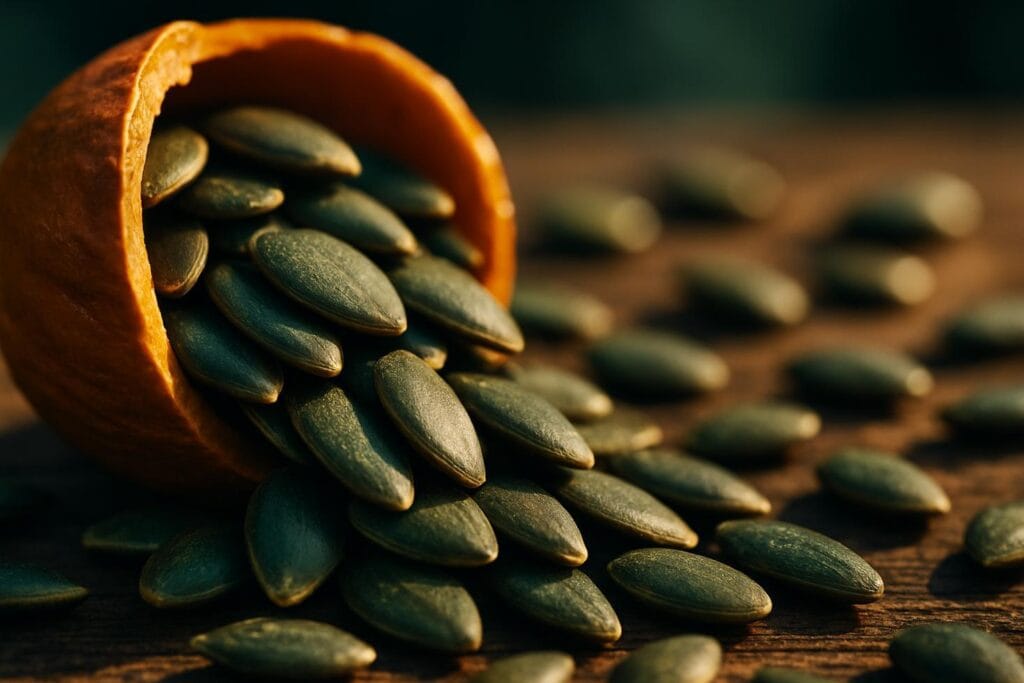
One ounce of pumpkin seeds delivers 2.2 mg of zinc — physically built into the enzymes that package insulin and convert thyroid hormone. That small handful is working hardware.
A single ounce of pumpkin seeds contains 2.2 mg of zinc, covering roughly 20% of the daily requirement for adult men. What makes that number interesting is not the quantity alone — it is what the mineral is doing once it arrives.
Zinc is not a passive nutrient that circulates and waits. It slots directly into the three-dimensional structure of certain enzymes, becoming a physical component of the molecular machinery. Remove it, and the enzyme loses its shape and stops functioning.
Three separate endocrine systems depend on zinc this way. One mineral, threaded through all of them.
How Zinc Functions as a Structural Cofactor in Endocrine Enzymes
Zinc is a cofactor in over 300 enzymes. In endocrine biology specifically, it shows up as a physical component — not just a helper from the outside.
In testosterone production, zinc is required for Leydig cell steroidogenesis. Research shows that severe zinc deficiency is associated with hypogonadism, and supplementation in deficient men can raise serum testosterone levels. The effect is most pronounced when correcting an existing deficiency, not in people already meeting their intake.
For insulin, zinc is integral to how pancreatic beta cells store the hormone. Insulin is held in secretory granules as crystalline hexamers — structures that require zinc to form. Transporters like ZnT8 regulate zinc movement in beta cells, and genetic variation in ZnT8 is linked to type 2 diabetes risk.
How Zinc Fits Into Thyroid Hormone Conversion
Thyroid hormone is produced in an inactive form called T4. Deiodinase enzymes convert T4 into the active form, T3 — the version cells can actually use. Zinc is required for those deiodinase enzymes to function.
Zinc deficiency has been associated with hypothyroidism-like symptoms and impaired T4-to-T3 conversion. Thyroid disorders are multifactorial — iodine, selenium, and autoimmune factors all play roles — but zinc is a documented and necessary piece of the pathway.
Pumpkin seeds are a solid plant-based source of this mineral. They are not the highest-zinc food available — oysters deliver roughly 25–30 mg per 3-oz serving, many times more per ounce. But as everyday foods go, a handful at 2.2 mg per ounce is a meaningful contribution.
Closing
The 1 oz serving that provides 2.2 mg of zinc also delivers 156 mg of magnesium, 2.3 mg of iron, 332 mg of phosphorus, and 8.5 g of protein. Those minerals are each running their own operations across metabolic and enzymatic pathways.
A small seed turns out to be a dense package of working parts.
Frequently Asked Questions
How much zinc is in one ounce of pumpkin seeds?
A 1 oz serving of hulled pumpkin seeds contains approximately 2.2 mg of zinc, equal to about 20% of the 11 mg daily requirement for adult men.
Do pumpkin seeds have more zinc than oysters?
No. Oysters provide roughly 25–30 mg of zinc per 3 oz serving. Pumpkin seeds at 2.2 mg per ounce are a good plant source but do not come close to oysters on a per-weight basis.
Can eating pumpkin seeds raise testosterone?
Zinc from pumpkin seeds supports normal testosterone synthesis, but the measurable effect on serum testosterone is most documented in men correcting a zinc deficiency, not in those already meeting daily requirements.
What enzyme converts thyroid hormone to its active form?
Deiodinase enzymes convert the inactive thyroid hormone T4 into active T3. Zinc is required for these enzymes to function, and deficiency is associated with impaired conversion.