That lemon in your kitchen isn’t just for your water or recipe. It’s holding tiny seeds that could grow into a tree that lives for decades.
And the best part? You don’t need a green thumb or fancy equipment. Ready to rescue those seeds from the trash and create something nice? Here’s how.
Why Your Lemon Seeds Deserve a Second Life
Growing citrus is easier than you might think. Those seeds you usually toss can become something really special for your home or garden. Here’s why it’s worth trying:
• Zero-dollar gardening: Instead of spending $30+ on a nursery plant, you’re using something you’d normally throw away
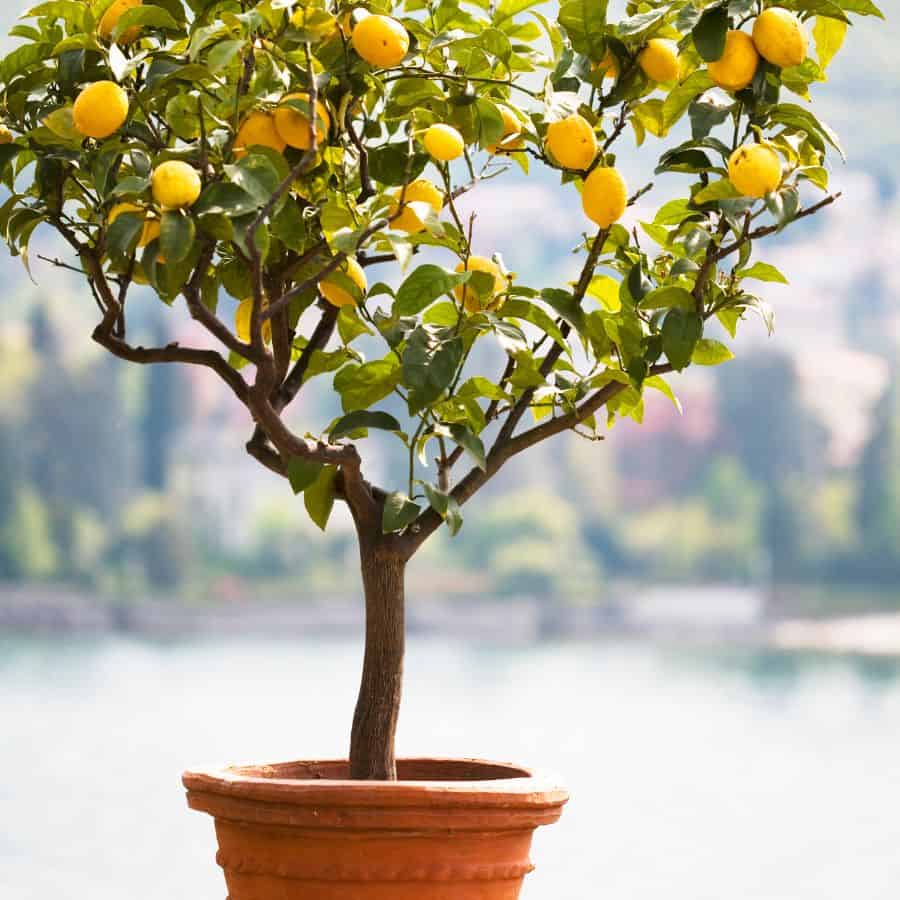
• Decades of beauty: A well-cared-for lemon tree can live for 50+ years – that’s a lifetime of greenery from one fruit
• Great smell: Even before fruiting, the glossy leaves and white blossoms fill your space with a fresh citrus scent
• Living science experiment: Perfect for curious minds and budding botanists of any age
The Seed Prep Most Gardeners Miss
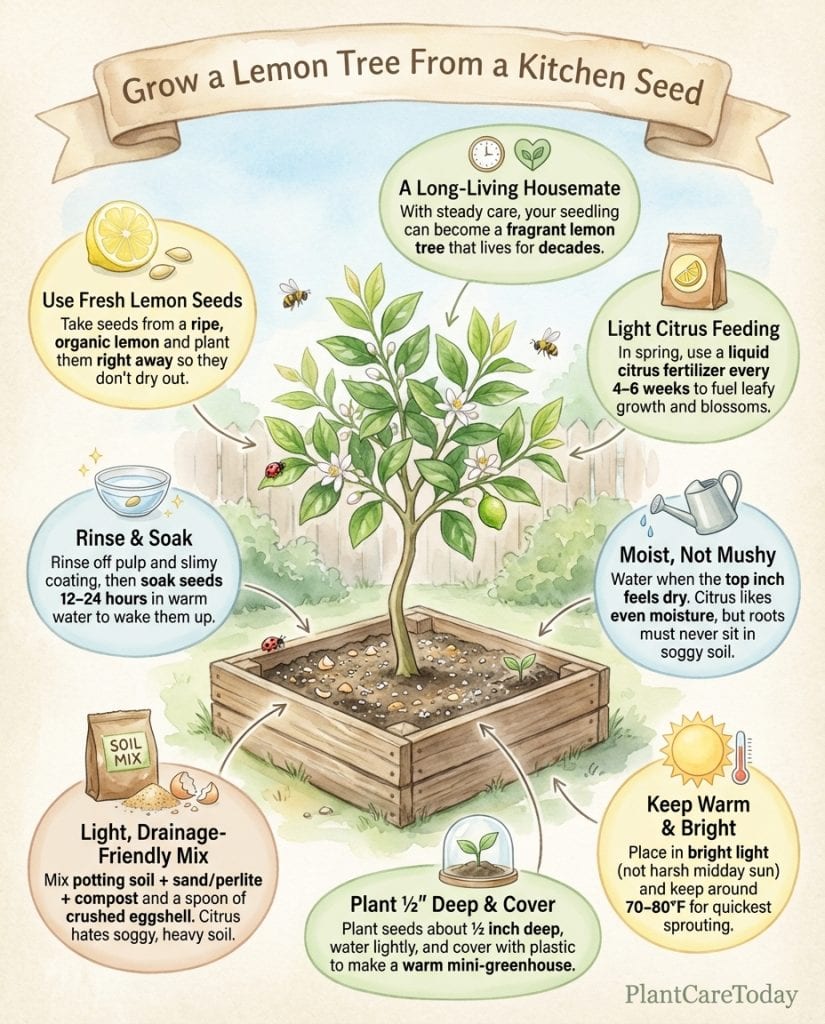
The real trick with lemon seeds is what happens in the first 10 minutes after cutting your lemon. Most people let them dry out. Don’t do this. Citrus seeds lose viability quickly.
For seed selection, choose organic, fully ripe lemons that haven’t been stored for weeks in cold storage. That bright yellow organic lemon from the farmer’s market? Perfect seed source. The pale one that’s been in the grocery cooler for a month? Not ideal.
Here are the prep steps:
- Slice your lemon and carefully remove seeds (avoid cutting them)
- Rinse under lukewarm water to remove pulp
- Remove the slimy coating by gently rubbing between your fingers – this mucilage actually slows down germination
- Optional step: Soak in warm water for 12-24 hours to jumpstart the process
Two Simple Ways to Wake Up Your Seeds
Your lemon seeds need the right conditions to sprout and grow. Choose your germination method based on what works for you:
For the Curious Plant Parent: The Paper Towel Method
This method lets you watch the sprouting happen:
• Dampen (not soak) a paper towel
• Place seeds inside, fold over, and seal in a zip-lock bag
• Store in a warm spot (70-80°F)
• Check every 3-5 days for those first sprouts

For the Patient Gardener: Direct Planting
This hands-off approach is easier on the roots:
• Fill a small pot with citrus-friendly soil mix (recipe below)
• Plant seeds about ½ inch deep
• Water lightly and cover with plastic to create a mini-greenhouse
• Place in a warm, bright location and wait for seedlings to emerge
The Soil Recipe That Makes Lemon Seeds Flourish
Your lemon tree’s future success depends on what you plant it in. Citrus hates soggy soil almost as much as it hates heavy, compacted soil.
Mix up this citrus blend:
• 40% quality potting soil (the foundation)
• 30% coarse sand or perlite (for drainage)
• 30% compost or aged manure (for nutrients)
• Extra boost: a tablespoon of crushed eggshells for calcium
The Care Timeline: Month-by-Month Guide
The difference between new and experienced gardeners is knowing what your tree needs each season. Your lemon seedling has different needs as it grows.
Spring (March-May): Growth Season
• Repot young trees into slightly larger containers
• Begin fertilizing with balanced liquid citrus food every 4-6 weeks
• Gradually introduce outdoor time (for frost-free areas)
• Increase watering as growth speeds up
Summer (June-August): Sun & Hydration Focus
• Water deeply in the mornings before the heat builds
• Check potted trees daily during hot spells
• Feed with high-potassium fertilizer if flowers appear
• Protect from harsh midday sun if leaves show burn marks
Fall (September-November): Transition Time
• Reduce feeding as growth slows
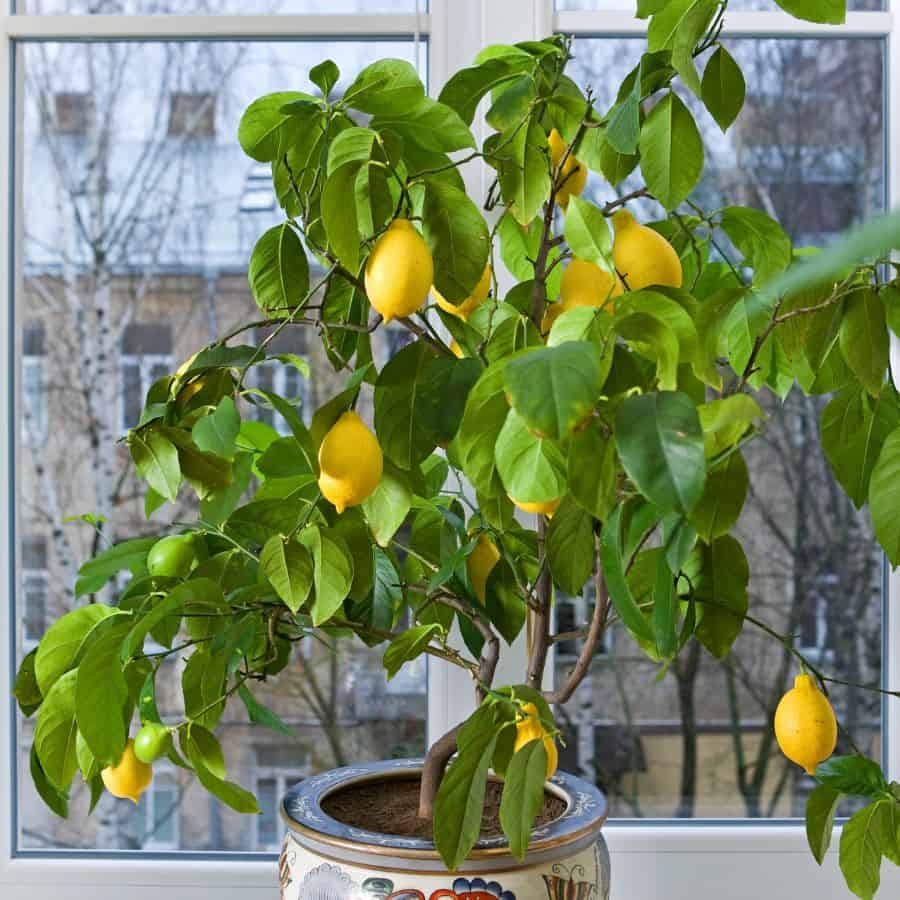
• Bring potted trees indoors before temperatures drop below 50°F
• Prune lightly to control size for indoor living
• Clean up fallen leaves to prevent fungal issues
Winter (December-February): Rest Period
• Reduce watering significantly. Only when the top 2 inches feel dry
• Skip fertilizer entirely during dormancy
• Keep bright indoor light but cooler temperatures (around 60°F)
• Watch for pests like scale insects that thrive in dry indoor air
Troubleshooting: Rescue Your Struggling Seedling
Even careful plant parents run into problems. Here’s what your lemon tree is telling you:
• Yellowing leaves: Usually overwatering or poor drainage. Let the soil dry more between waterings.
• Leaf drop: Often caused by sudden temperature changes or moving from outdoors to indoors. Make transitions gradual.
• Sticky residue on leaves: Likely aphids or scale insects. Treat right away with neem oil or insecticidal soap.
• Curling leaves: Usually a sign of underwatering or low humidity. Mist regularly or use a pebble tray.
The Patience Game: When Will Your Tree Bear Fruit?
Here’s the reality. Seed-grown lemon trees typically take 5-15 years to produce fruit. But there’s a workaround that commercial growers use.
Once your seedling is established (about 1-2 years old), consider grafting it onto mature citrus rootstock. This can cut your wait time in half. It’s like giving your teenager the wisdom of a 40-year-old.
If grafting feels too advanced, focus on these practices to encourage faster growth:
• Use large pots (at least 10-15 gallons for mature trees) to allow root expansion
• Keep up with consistent care and fertilizer cycles
• Prune to create a strong branching structure
• Provide 10-12 hours of bright light daily
Multiply Your Success: The Clone Method
Once your first tree is doing well, you can create more. Here’s something useful to know: stem cuttings from your established tree will grow much faster than new seeds.
In spring, snip 6-8 inch sections of healthy new growth, dip in rooting hormone, and plant in your citrus soil mix. Keep humidity high until roots develop (usually 2-4 weeks). These will reach maturity faster than seed-grown plants.
Your Lemon Tree Journey: The Reward
Growing a lemon tree from seed takes time, but it offers something valuable. You’re transforming something disposable into something that brings beauty, fragrance, and possibly fruit for decades.
Whether your tree eventually produces lemons or simply serves as a nice, aromatic houseplant, nurturing it from a tiny seed is a connection to nature that few other gardening projects can match.
Remember: the healthiest lemon trees come from consistent care, not perfect conditions. Start today with those seeds you almost threw away.