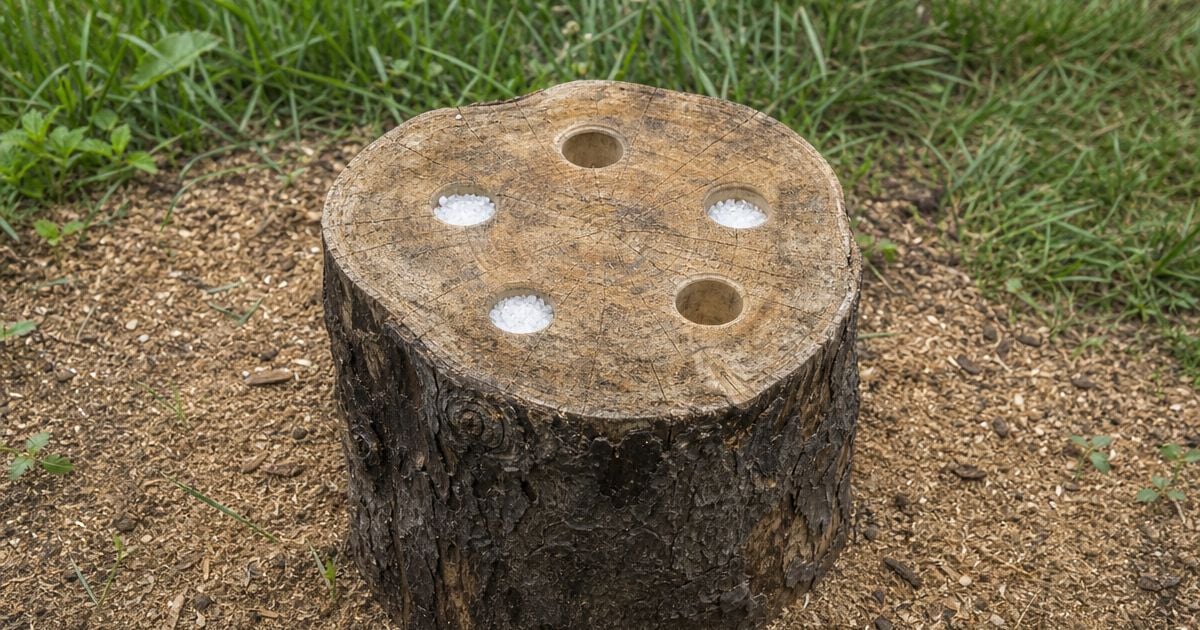
Epsom Salt For Stump Removal: Does It Actually Work?
Got an old stump sitting in the yard? Maybe you’ve read online that Epsom salt will kill it for you. You’re not alone. “Drill holes, pour in Epsom salt” is one of the most repeated stump-removal tricks on the internet.
But before you spend an afternoon drilling into a stump, let’s look at what actually happens when you do this — and what the university research says.
What Is Epsom Salt?
Epsom salt isn’t table salt. It’s magnesium sulfate — a natural mineral made of magnesium and sulfur that dissolves easily in water.
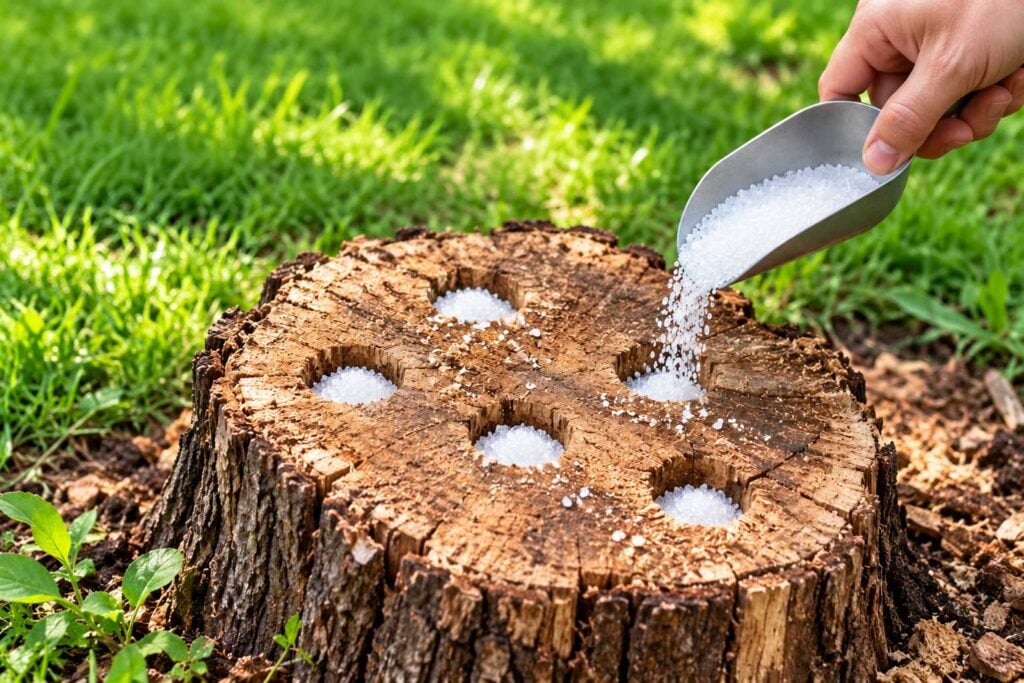
It’s genuinely useful in the garden in the right situation: as a fertilizer for a confirmed magnesium deficiency. Magnesium is part of how plants build chlorophyll. What it isn’t is a cure-all — and that includes for tomatoes and roses.
Despite what you’ll read (including what used to be on this page), university extension research has found no evidence that routine
Epsom salt use makes tomatoes sweeter or more productive, or boosts flowering on roses. That holds true unless your soil is actually short on magnesium.
Does Epsom Salt Kill a Tree Stump?
Here’s the honest answer: not in any way research backs up. I checked the two sources this page used to cite for that claim: Clemson HGIC and NDSU Extension‘s “Epsom Salt Myth” page.
Neither one is actually about stumps at all. Both are about Epsom salt and tomatoes. So that citation was pointing at the wrong claim.
What I found instead came from extension sources that were actually asked this exact question. A Washington State University Extension fact sheet confirms that a concentrated dose of Epsom salt can cause “salt injury” — it can dry out and damage plant tissue it directly touches. That’s real.
But two separate Cooperative Extension responses that looked specifically at Epsom salt and stump killing both came back with the same conclusion: no university-based research shows it actually kills the stump or speeds up decay.
One extension responder put it plainly: “I could find no university based research that would support the claim that Epsom salts are effective in removing tree stumps.” That responder also noted a real attempt where the sprouts “were still coming up relentlessly” afterward.
Why the “Drill and Fill” Method Falls Short
Here’s the piece that’s missing from most of the how-to guides: once a tree is cut down, there’s no longer a system pulling material from the cut surface down into the roots. That transport is driven by the leaves.
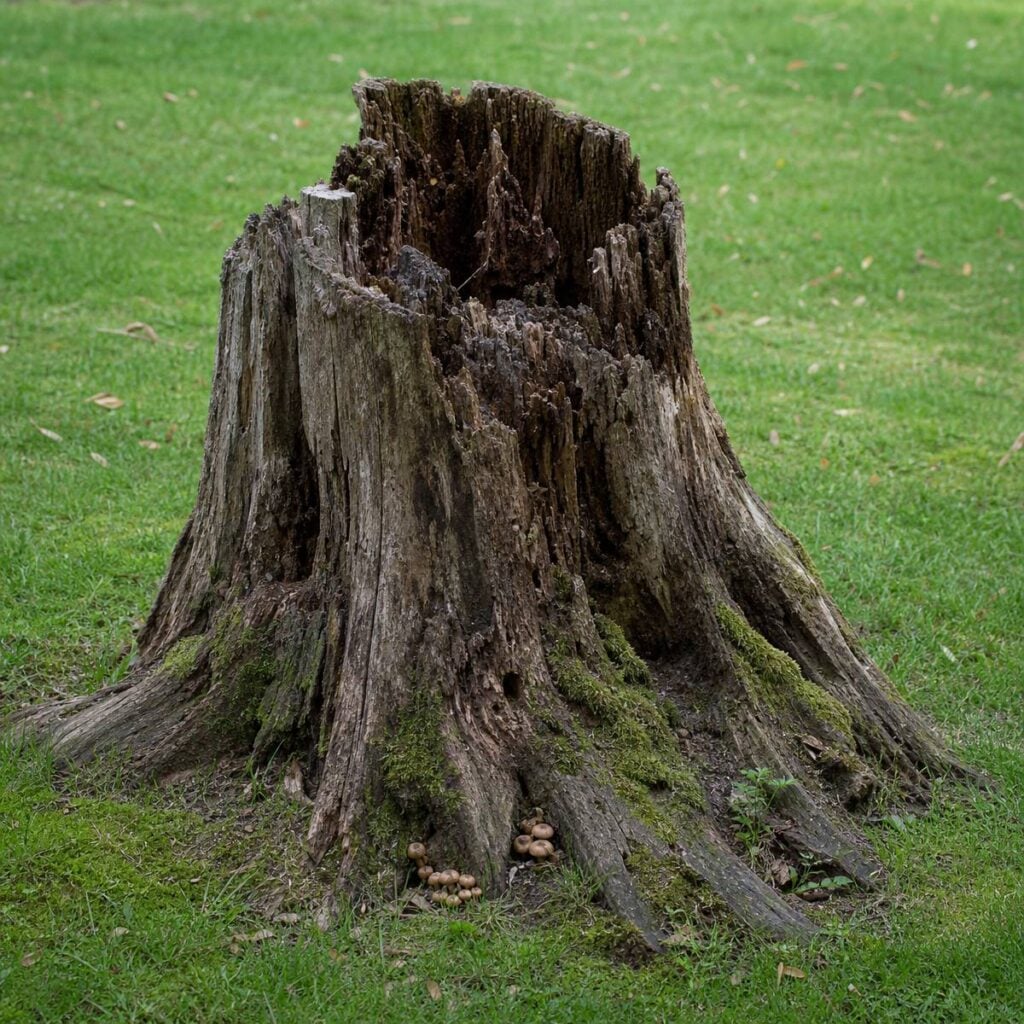
No leaves, no transport. So even if Epsom salt dries out a bit of wood right around the drilled holes, there’s no real mechanism carrying it down into the root system to kill it from within. That’s exactly the claim this method makes.
What Actually Removes a Stump
If you want the stump gone, or resprouts stopped, these are the methods with real backing:
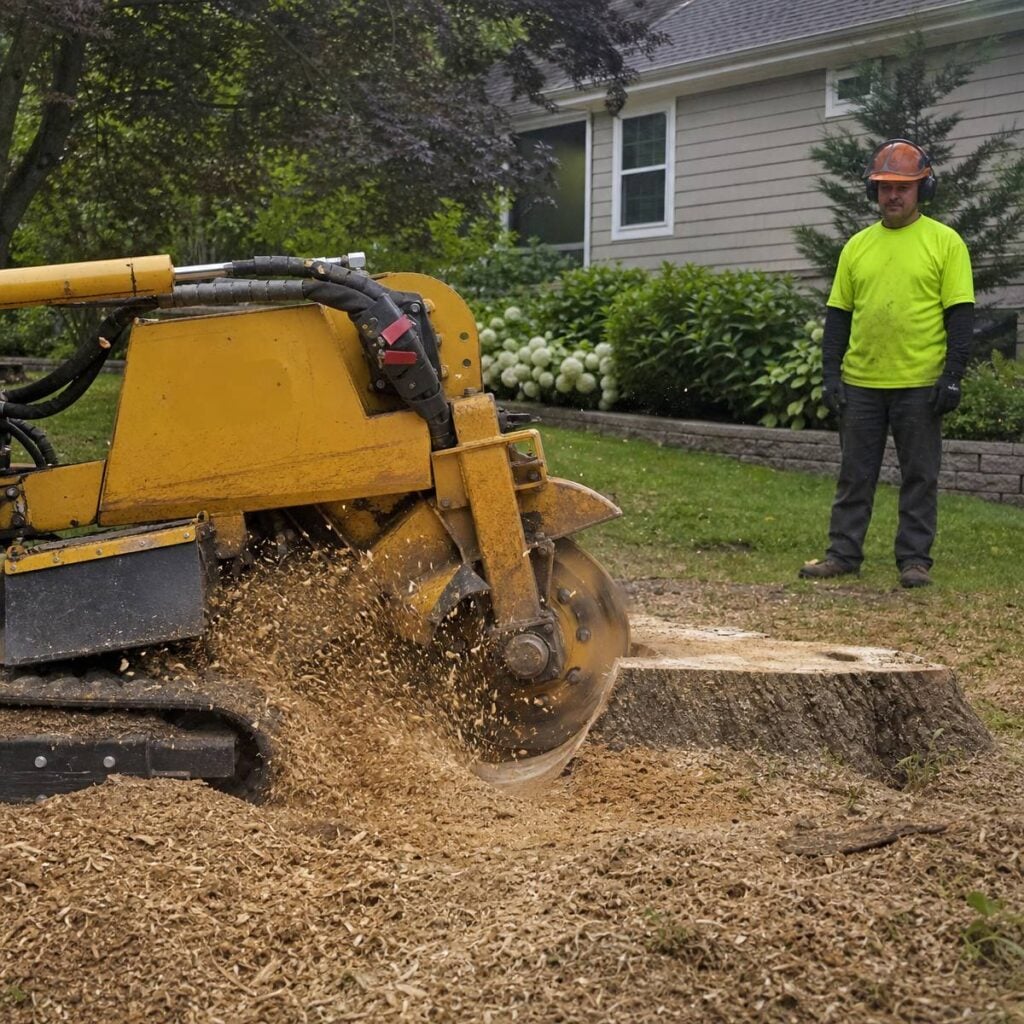
- Grinding. The fastest, most complete option. A rented or professional stump grinder chews the stump and major surface roots down below grade in one visit.
- A labeled stump-and-brush herbicide. For a stump that keeps sending up sprouts, apply a labeled herbicide (glyphosate or triclopyr) to the freshly cut sapwood — the ring of lighter wood just inside the bark. Do this ideally in late summer or fall, when the tree is naturally moving reserves down into the roots. That timing is what makes the treatment actually reach the roots. It’s exactly what the Epsom salt method can’t do.
- Natural decay, sped up with a real fertilizer. If you’re not in a hurry, a cut stump will rot on its own over a few years. You can speed that up by drilling holes and filling them with a slow-release nitrogen fertilizer, not Epsom salt. Nitrogen actually feeds the decay fungi and bacteria breaking the wood down.
- Digging or hiring it out. Smaller stumps can be dug out by hand. For anything large, or if you don’t want to deal with the equipment, a tree service with a grinder will get it done in a fraction of the time.
If You Still Want to Try Epsom Salt Anyway
It’s cheap. Drilling a few holes and dropping in Epsom salt at just the stump itself isn’t going to do real harm the way dumping a lot of it broadly across your soil could.
That broader use can throw off soil minerals and, in enough volume, raise soil salinity. Just go in with the right expectation: you’re not curing the stump, you’re waiting it out.
If the stump is a safety hazard — a tripping risk, or in the way of new construction — don’t count on Epsom salt to solve that on any predictable timeline. Grinding or a properly timed herbicide application will actually get you there.
Frequently Asked Questions
Does Epsom salt kill a tree stump?
No, not in any way research backs up. Extension responders who looked at this exact question found no university-based research showing Epsom salt kills a stump or speeds up decay. One even noted that sprouts “were still coming up relentlessly” after someone tried it.
Will Epsom salt make a stump rot faster?
There’s no university-based research showing that it will. Concentrated Epsom salt can dry out wood it touches directly, but that’s a local effect. To speed up decay, drill holes and fill them with a slow-release nitrogen fertilizer instead. Nitrogen feeds the fungi and bacteria that break the wood down.
Why doesn’t drilling holes and filling them with Epsom salt work?
Once a tree is cut down, nothing pulls material from the cut surface down into the roots. That pull is driven by the leaves. So Epsom salt may dry out a bit of wood around the holes, but nothing carries it into the root system to kill it from within.
What is the best way to remove a tree stump?
Grinding is the fastest, most complete option. A stump grinder chews the stump and major surface roots down below grade in one visit. Smaller stumps can be dug out by hand, and a tree service can handle large ones. If you’re not in a hurry, a cut stump will rot on its own over a few years.
How do I stop a stump from sprouting?
Apply a labeled herbicide (glyphosate or triclopyr) to the freshly cut sapwood, the ring of lighter wood just inside the bark. Ideally, do this in late summer or fall, when the tree is naturally moving reserves down into the roots. That timing helps the treatment actually reach the roots.